
Wondermints: "This Is The Future – Let's Figure It Out!"
In Part Two of our interview, Darian Sahanaja talks about the recent reissue of his band's 1995 debut, plans for future reissues, and the "retro-futurist" aesthetic that infused their discography.

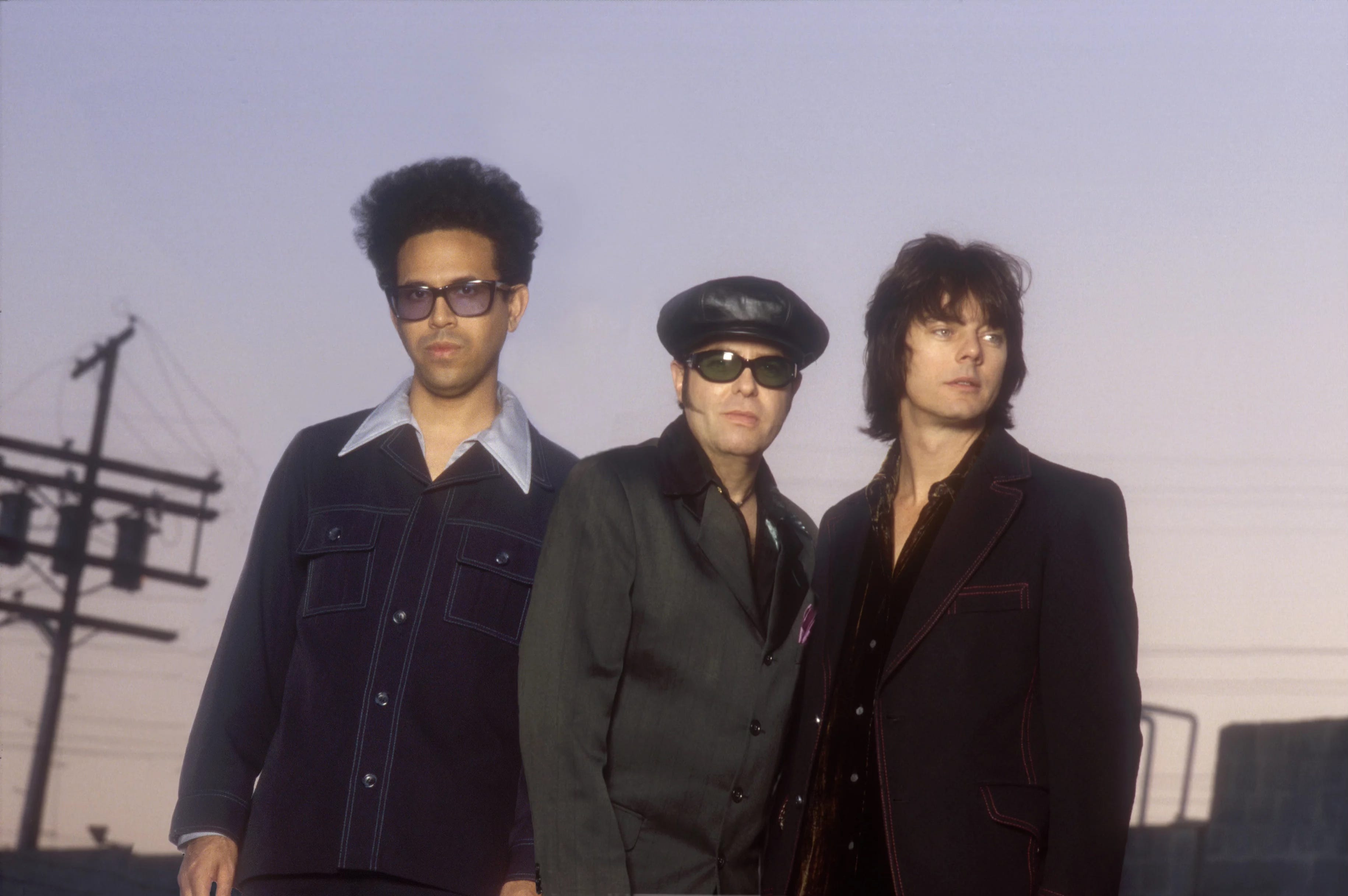
I was digging through the bins last week at a small record store in New York City, when the guy behind the counter and I unexpectedly bonded over our shared love of power pop. (The shop — Downtown Music Gallery — actually specializes in avant-jazz and Canterbury-era prog, but I’ll happily take a knowledgeable convo about guitar-driven pop wherever I can find one.)
The conversation began with our shared love of Midwestern ’70s and early ’80s stuff like Cheap Trick, Off Broadway and The Kind (the latter of whom actually played our high school gym during my sophomore year), but soon moved on to the L.A. pop scene of the 1990s. “Oh man, I love the Wondermints!” gushed my new friend — I think his name was John — and those words verily warmed my heart. Because back in 1994, when I saw my first Wondermints gig, I knew that they had something really special, and hoped like hell that the rest of the world would someday catch on…
The band — initially formed around the core of vocalist/keyboardist Darian Sahanaja and vocalist/guitarist Nick Walusko, then expanded to include singing drummer Mike D’Amico with numerous other talented L.A. musicians dropping in and out for gigs and recording sessions — would go on to become best-known for landing a song on 1997’s Austin Powers: Man of Mystery soundtrack and joining Brian Wilson’s touring ensemble in 1998, an arrangement which led to Brian Wilson Presents Smile, an incredible 2004 re-recording of Wilson’s long-shelved Beach Boys concept album from 1967.
All of which was incredibly impressive, of course — but the Wondermints’ own albums are ultimately far more meaningful to me. And while I’m forever glad that their long-running gig with Brian helped make the world at large aware of the musical brilliance of Darian, Nick and Mike (while also supplying them with a well-deserved paycheck), it still makes me a little sad that the touring and recording commitments with Brian inevitably shifted their focus away from making new Wondermints music.
Only four official Wondermints albums were ever released: 1995’s self-titled debut (which has recently been reissued on vinyl in a special 30th Anniversary edition, and can be purchased directly from their Tomorrow Labs label), the 1996 covers album Wonderful World of Wondermints, 1998’s Bali, and 2002’s Mind If We Make Love To You. All are filled to the brim with fantastically melodic flights of pop fancy, and all deserved — and continue to deserve — a much wider audience. (There’s also a UK-only “odds n’ sods” 2009 comp called Kaleidoscopin’, which is well worth tracking down.) But they always remained something of a cult act, and then Nick’s unexpected passing in 2019 essentially brought the Wondermints saga to an end.
The music thankfully lives on, though, and according to Darian there may be more Wondermints vinyl reissues on the way. In Part One of our interview, he and I spoke about how his and Nick’s early songwriting and recording partnership eventually led to the recordings that would be featured on the Wondermints album.

And here in Part Two, we get into the band’s “retro-futurist” outlook, the recording of the band’s three other LPs, and the thought process that went into the new Wondermints reissue. We also discuss the band’s legendary 1998 Spaceland gig to celebrate the release of Bali, a night which not only included onstage appearances by Brian Wilson and Evie Sands, but also featured a mini-set by Nancy Sinatra, who sang “Some Velvet Morning” with duo-duet help from David Ponak and myself as the “Hazlenuts,” which will forever remain one of the highlights of my life…
JTL: You mentioned you and Nick going to Sci-Fi conventions and being into psychotronic films and stuff like that, and one of the things I always loved about you guys was that it wasn’t just about the music. There were all kinds of other aesthetics and influences in what you were doing — 1960s TV shows, psychotronic films, Nick’s fascination with outer space exploration, your love of Mid-Century imagery like the classic Pan-Am Airways logo… there was so much else that was part of the package.
Darian Sahanaja: Again, I just don’t know how to quantify or qualify that, because it’s just what we liked, you know? It’s also fascinating to me that in the past 10-15 years, Mid-Century Modern has exploded. I mean, the furniture has gotten so expensive, and new homes are all designed that way; and so of course, I have to kind of roll my eyes a little when people are like, “Hey, you’re into that Mid-Century Modern thing that’s hip now, right?” [laughs] And I want to pull out a copy of our Wonderful World of Wondermints album — there’s all this Mid-Century Modern stuff in there — and be like, “Yeah, this is from 30 years ago!” [laughs]
At that time, I remember Nick referring to what you were doing as “retro-futurism”.
That’s true! And I have to say, that was the first time I’d ever heard that term. Of course, I’ve since seen it written up in articles galore, but I want to say the first I’d ever heard of it was when Nick said it; I don’t know if I’d ever heard it anywhere before that. But it is true — at the time, it was sort of what we envisioned this fantastical future to be. We loved Disneyland 1967, you know? We loved all the Sci-Fi films and the aesthetics, like the bubbles and the streamlined architecture…
Satellites…
Yeah, there was the whole Joe Meek thing, too… but I guess it was a promise of what tomorrow could bring, with technology and science, just in a fantastical way.
Speaking of Wonderful World of Wondermints — that came out on Toys Factory, which was the same label that put first album out.
Yeah, Mr. Eshima, after he put out the first album — and here’s my Chris Carter impersonation of him again — he says, “Wondermints second album — covers album!” And we’re like, “Uhhh… not really what we had in mind, but okay!”
He was offering us money to record a covers record, and we didn’t understand it at the time because we had new songs that were ready to go. But now having visited Japan as often as I have, and it becoming one of my favorite countries in the world, it all makes sense; having met people there and understanding how they process music and history, it makes sense. It seems like the Japanese really, really love that analysis of influences; they love seeing how an artist’s sound becomes what it is, based on what they were influenced by.
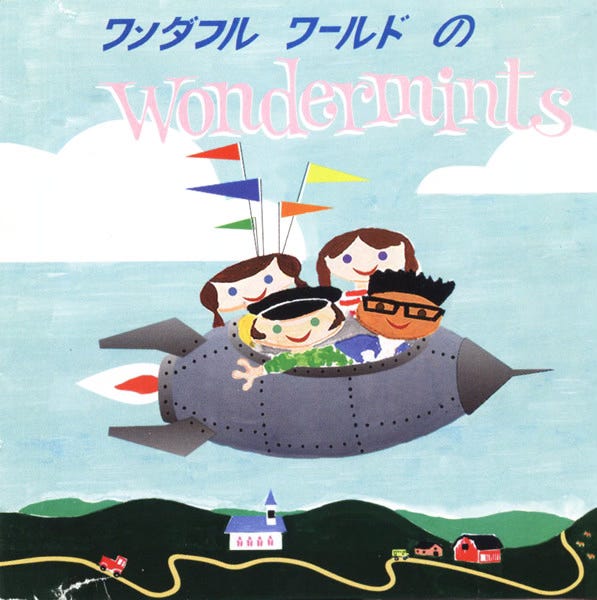
And sure enough, we put that [covers] record out… and next thing I know, we’re getting letters from fans in Japan, and one of them sent us a VHS tape. And the footage on the tape starts off with a street in Tokyo — you’re just seeing the street, traffic, pedestrians — and then it pans around and you see a storefront. It zooms in closer and closer, and on the door is this little sign that says, “Wondermints Meeting No. 1!” I’m like, “What?!?” [laughs] And then they open the door, and there are all these young kids sitting around, and there’s a DJ playing Bacharach and cool movie soundtracks, all this stuff that we love.
And that’s when it fell together, like, “Oh, they’re really, really into diving into the culture and learning!” Really into discovering. So yeah, these kids are sitting around talking about music or this cult ’60s culture stuff; it was a gateway for them, like, “Beyond the Valley of the Dolls? What’s this? The Carrie Nations? That’s cool!”
Is there any chance that like that you’re gonna put Wonderful World of Wondermints, or even Bali, out on vinyl at some point?
I mean, the hope is to is to reissue all of them. I don’t know how long vinyl is going to be popular enough to do it. It seems like it keeps going; every time I think, “Okay, it’s run its course,” there’s more pressing plants being opened up, and all these new artists are releasing stuff on vinyl. And so, I mean, as long as it lasts…
We put this new reissue out on vinyl ourselves. We had gotten offers from labels; we were entertaining the idea of doing it five years ago for the [album’s] 25th anniversary, and Nick and I discussed it. And even at that time, we were like, “Oh God, it’s time. We should really start to reissue our catalog.” I remember Nick and I talking about it — “Yeah, let’s talk to one of these labels. Maybe they’ll put it out on vinyl, and maybe we’ll do a few shows to promote it.”
So yeah, that was all floating around — and then Nick passed away, and I just didn’t want to deal with it. But over past five years, it just kept floating up again, and people kept asking. And so I finally sat down with Mike and Susan, Nick’s wife, and we thought, “Well, should we do this? Can we do this?”
And I thought of the challenges of doing it. I’m such a control freak when it comes to the artwork and the quality of it all, so I just kept thinking about how, if we were to go with a label, one of the challenges would be that I’d have to constantly be working with their art department, for example. And I could already see myself thinking, “Boy, I want to tweak this one thing,” something that might take me five minutes, but which would take them a whole day. And I just kept thinking about how frustrated I could be with that kind of process.
So that was a big sticking point. And then just the whole thing of how the industry’s changed and models are completely different now, and it’s not like it used to be… We thought, well, if we have the funds, if we can do this and put it out ourselves, then we might actually make money [laughs] — as opposed to a label putting it out with the promise of us “getting a cut of the percentage of blah, blah, blah, blah, blah.” In the end, you keep getting these statements sent to you with a number that’s just like zero, because their claim is always, “Oh, we spent X amount of money on advertising and promotion and this and that.” You never make anything, you know?
So we just decided, if we can pull it off, we’ll do it — and if we make a profit, then that’ll go towards future reissues. We pressed up 1000 copies of this album, and I want to say that, as of maybe today or yesterday, we’ve broken even. Which is amazing, considering we didn’t cut any corners with this. I mean, the only corner we cut with this is that we didn’t do 180 gram vinyl — which, you know, is a little bit of an…
Overrated selling point?
Yeah, exactly. But we used top quality printing, and we did card stock for the inner sleeves; we didn’t spare much in the expense department. It did cost us quite a bit more, but it was all worth it. Because now the overall sort of message I’m getting, which is wonderful, are people saying, “Oh my god, this is classy! This is a real class job! It sounds great! You hold it in your hands, and it just feels like a piece of art.” It’s a substantial thing.
I knew it the second that our buddies Jim Laspesa and Ronnie Barnett — both of whom worked at record stores for years, Ronnie more recently — came to the house just as I got a bunch of the newly pressed record delivered. I was asking them, “What do you think we could sell these for?” I was kind of going over the numbers and this and that and thinking forty bucks was maybe pushing it…
This was back in the summer, and just between summer and now inflation has really influenced our opinions. [laughs] But Ronnie was saying, “Forty bucks? I don’t know, guys, I don’t know.” And then I pull it out, and Ronnie’s holding it his hands and goes, “Oh, this is really good. Yeah, you could charge forty bucks for this!” It was like, “Wow, all right!” [laughs] It was so immediate, you know — he felt it, looked at it and just knew that we didn’t go down the street and print it up at the freaking Joe Schmo record pressing plant.
I mean, that was the thing – I was gonna buy the record anyway, just because I loved those songs and wanted to have them on vinyl. And yeah, forty bucks is a little more than I would usually pay for a new record. But at the same time it’s like, “Well, it’s really two LPs,” thanks to the extra tracks, and the whole package is even better than I’d hoped. I also love all the alternate photos from the cover session, and it’s just a wonderful piece overall. So, well done, Sir!
Awww, thanks. Again, I’m hoping it does sort of establish a precedent for more reissues. We’ve pretty much broken even on this, so the rest of anything we make beyond this would be going towards future reissues, and we kind of like the idea of releasing them as anniversaries. What that means, though is that… we tend to favor our original music more than the covers. I love the covers record, but that would probably be the lowest priority of releases.
And also probably give you the most headaches, at least in terms of licensing.
Yeah, exactly. They were able to do a lot of that easily in Japan, but I really don’t know; we’d have to look into that. But probably the thing that makes most sense, as far as the promoting and marketing goes, is that our last album — Mind If We Make Love to You — was put out in 2002. So technically, 2027 would be the 25th anniversary of that. And then 1998 was when we brought out Bali, so 2028 would be the 30th anniversary of Bali. So they might be released out of chronological order. [laughs]
But I guess one thing that I’m really happy about is that when it comes to a favorite Wondermints album amongst fans, we’ve got a nice, even split. I would say a third of them really love this, our first album; and then another third is into Bali, and then a whole other third is into Mind If We. So that’s a nice feeling.
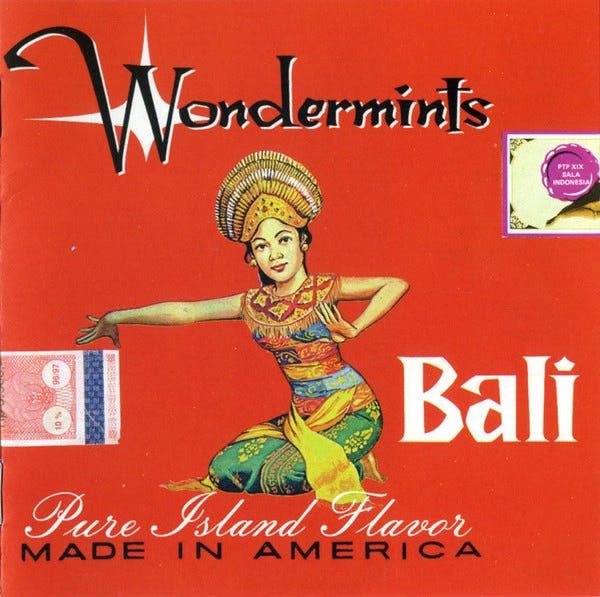
I would say Bali is my favorite.
Yeah, I think I remember you being in the Bali camp, for sure. I mean, it was definitely the most fun record to make. The first album, as you know, was kind of piecemeal, and it was a compilation of stuff that we’ve done over previous years. And Mind If We was done also kind of piecemeal, because we were already working with Brian, and I remember it was always a question of whether we could even be an active band because we were just so busy; but we managed to fit in a recording session here and there, in between touring with Brian.
Whereas Bali, I think of that as us being mad scientists — we just locked ourselves in the studio and basically ate, breathed, and shit music. [laughs] It was such an intense and fun time. And it was all done in a concentrated amount of time, and just really pushing the envelope. At the same time, Bali was the first album we recorded fully digital. As I explained earlier, even in our analog four-track days, we loved the idea of being able to stack tracks and flying them back and forth. And technology, by the mid to late ’90s, had gotten to the point where, again, it really sort of pushed our creative limits. Nick and I had all these great ideas of what we could do, sonically.
That was right around that time that we got the “Austin Powers” song placement in the movie — and as a result, we got a really amazing publishing deal from EMI. So we’re given this big lump sum of money, and the first thing we did was buy a Pro Tools system, which was not the thing for an indie band to do back then; they were expensive, but we just thought, “This is the future. Let’s figure it out.”
We always sort of embraced that kind of challenge. And I remember Nick and I driving up to San Francisco because this guy was going to sell us this Pro Tools system; we didn’t trust all that valuable gear to be sent in the mail, so we drove up and picked it up ourselves, and put it together.
So, yeah, that was the first album we did fully digitally on a computer. Aside from it being really fun and just us cracking each other up in the studio, like, “Whoa! Check out this sound!” [laughs] It was like, “How far can we push things now?” The flip side of that was, it was at a time when things were changing in that area of recording. I remember we had to be incredibly discreet about saying that our new album was recorded on a computer; I just remember feeling that if I mentioned that we’re recording it on a computer, people would immediately be turned off — that they would go into it thinking, “Oh, this can’t be good, because it’s going to sound ‘computerized’ or ‘robotic,’” whatever that meant, if you said you recorded it on a computer.
But Nick and I never saw technology as sort of dictating what we did. We always saw it the other way around, like, “These are tools we can use to do whatever we want!” So, yeah, that’s what I think of when I think of Bali — just this really fun, experimental exploration of sound.
I think of it as one of the great lost albums of the 1990s. I don’t believe it’s on streaming anywhere…
None of our music is.
And if I recall correctly, as with the first album, it got kind of a staggered release — it came out in Japan first, and then came out on a different label in the US a year or two later. And like a lot of great stuff that got released in the late ’90s, it’s just kind of forgotten now. So I would love to have it back.
None of our music is streaming. It’s not available streaming anywhere. So that was a whole other thing that we need to address. We could just, like, put them all out now [on the streaming platforms], but we feel like that might undermine the new releases, because we’re remastering them. I mean, I suppose we could put them out as is and then replace those, but I don’t want a whole bunch of different versions floating out there.
Again, the CDs — We put all our albums out during the CD era, so the sound of the first album on CD and Bali, to me, are very compressed. Especially Bali; I am kind of looking forward to remastering it so that it breathes a little more, and it’s friendlier to warm analog. Again, that was recorded on Pro Tools. It’s our first full full digital record, and so might be a little too harsh for my ears right now. [laughs]
So yes, that would be cool. But you’re right — I don’t know if it was a mistake, but it probably was that we haven’t had our stuff available all these years. But what’s nice is also that, by our stuff not having been out all this time, when it does come out it becomes more of a talking point. It’s more of an event when people are discovering it again.
But Bali, yeah, that was such a fun record. And that’s around the time, 1996-97, which was a really fun time to have been playing live, too. We were playing with so many cool bands, like the show we did with Redd Kross and Shonen Knife. [February 8, 1997 at the Troubadour in West Hollywood, as part of that year’s Poptopia! festival.] I feel like that’s when that sort of movement of bands that was happening in LA was really hitting their stride at that point — The Negro Problem, The Sugarplastic, Baby Lemonade, all those bands — and Bali was right in the middle of all that stuff. And I also think it was for the American record release of that record that we were playing at Spaceland, and that’s when Brian and Melinda and Nancy Sinatra came to the show, and when you came up and you sang! I think it was for the Bali record.
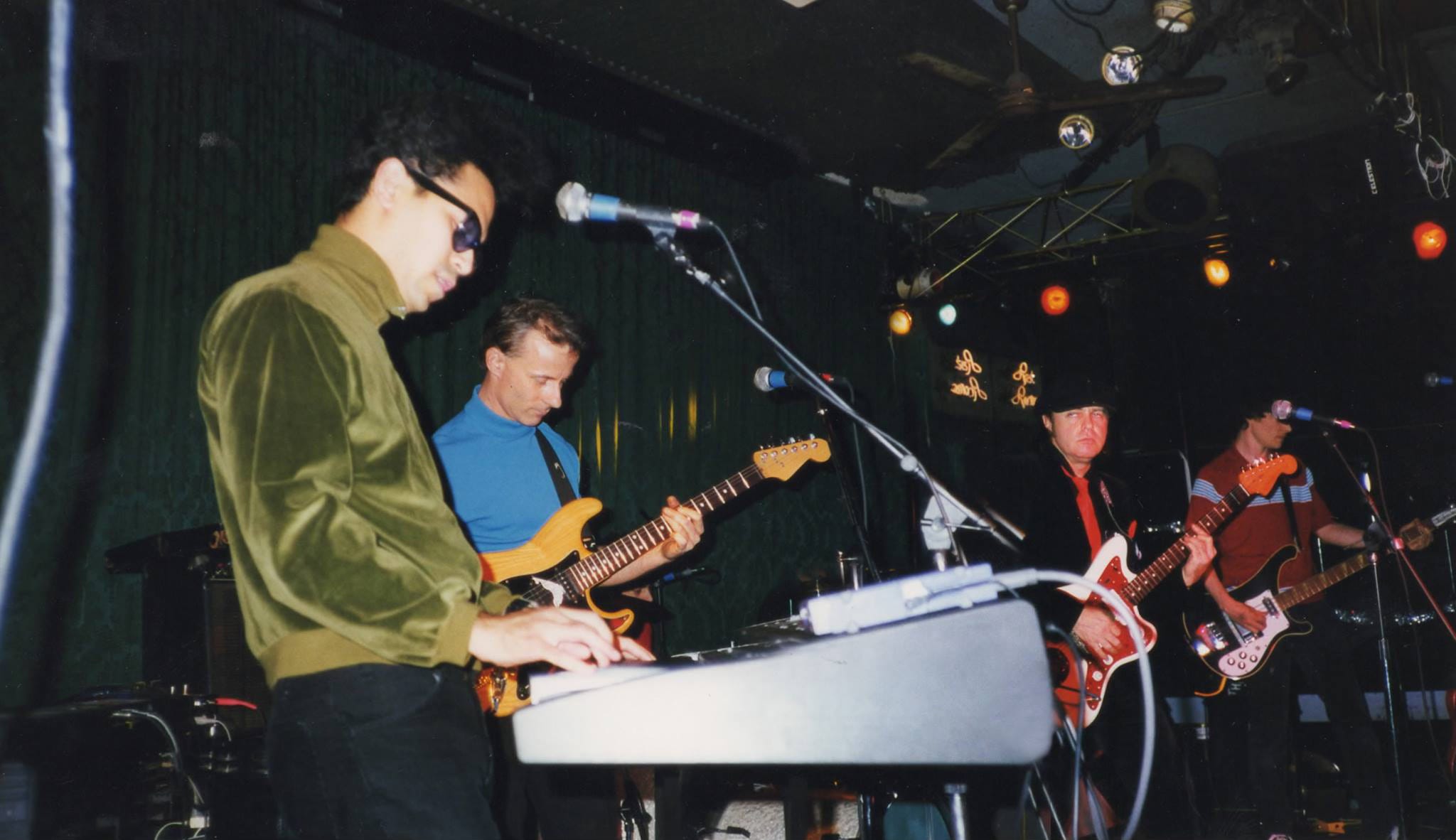
Was it? It would have been around that time, for sure…
Yeah, you know what? I’m going to definitely say it was, because Bali came out in ’98, and that show was in late ’98. Because that’s when we had gotten the sort of… it was suggested that Brian was going to do some shows to promote his then-latest record, and that he was considering us to be in his backing band. And so that’s why they came down to Spaceland, and to sort of check us out. Brian had seen us, but I think Melinda really wanted to scope us out.
I remember one show at the Roxy in like ’95 or ’96, where Brian came to see you and you closed your set with “Darlin’” in tribute to him.
Yeah, Brian came to a few of our shows. And there were also a couple radio shows that he did where he was going to be interviewed, but he’s such a nervous interviewer that he just wants to get to music — you know. “I’ll talk, and then I’ll do some songs.” And if he wanted to do songs, he would ask that we be there to back him up.
Yeah, I was at one of those radio tapings with you guys. But okay, that all makes sense — it was around the time of Bali was when you guys went on the Brian trip.
Yeah, it was late ’98 that there was the proposal that Brian might go do some shows to promote his new record, and we just happened to be playing a show to promote the Bali record release. It may have come out earlier in the year in Japan or something like that, and then we were going to put it out here. And that just happened to be right around the time that the Brian talk was happening, and that’s when they came down, and Rodney [Bingenheimer] brings down Nancy… Wow, that was a fun night.
It really was. And the fact that I got to sing “Some Velvet Morning” with Nancy Sinatra is completely down to you — and that’s one of the greatest moments of my life, so I’m forever thankful to you guys for that.
What a trip. What a trip! And also, Evie Sands played with us that night. Lisa Jenio and I had just met her a few months earlier; I don’t know if you know that story. Obviously, Lisa and I were huge girl group records fans, and some of our favorites were Evie Sands records. But we had no idea what she looked like, or if she was still making music…
I remember, I was down by the beach one day, I opened the LA Weekly or whatever, and there was an ad for Evie Sands at Genghis Cohen. And I thought, “Could it be the Evie Sands?” And I remember going to a pay phone and calling Lisa and saying, “Hey, you know there’s an Evie Sands playing tonight at Genghis Cohen. You think it could be her?”
So, we bought tickets, we ate dinner, and come show time we’re sitting in — I don’t know if you remember Genghis Cohen, but they had like these little church pews. So we’re sitting there in this dark, little, tiny room, and finally this little, tiny lady comes out with her acoustic guitar, and both of us go, “Oh no… it’s like some singer-songwriter folk person!” [laughs] And we’re ready to leave, but then she strums her first notes and starts to sing, and it was unmistakably her voice. We were like, “YESSSS!!!” And then she did “Take Me For a Little While,” “I Can’t Let Go,” “Angel of the Morning,” all the songs, and it was so great.
And after the show, we hung out — we actually saved her from some crazy fan who was basically monopolizing all of her time. But we became really good friends, and a few months later she came to that record release show, and we invited her up to sing “I Can’t Let Go”. So that show went great, because not only were Brian Wilson and Nancy Sinatra there, but we had Evie there, too.
You may also groove on the following…


I was at that Spaceland show as well, tremendous night of music. Very memorable because that was the first time I shook Brian Wilson’s hand! The late ‘90s L.A. music scene was really happening, and The Wondermints were a huge part of it.
Retro-futurism? A movement that completely passed me by. WTF?😳